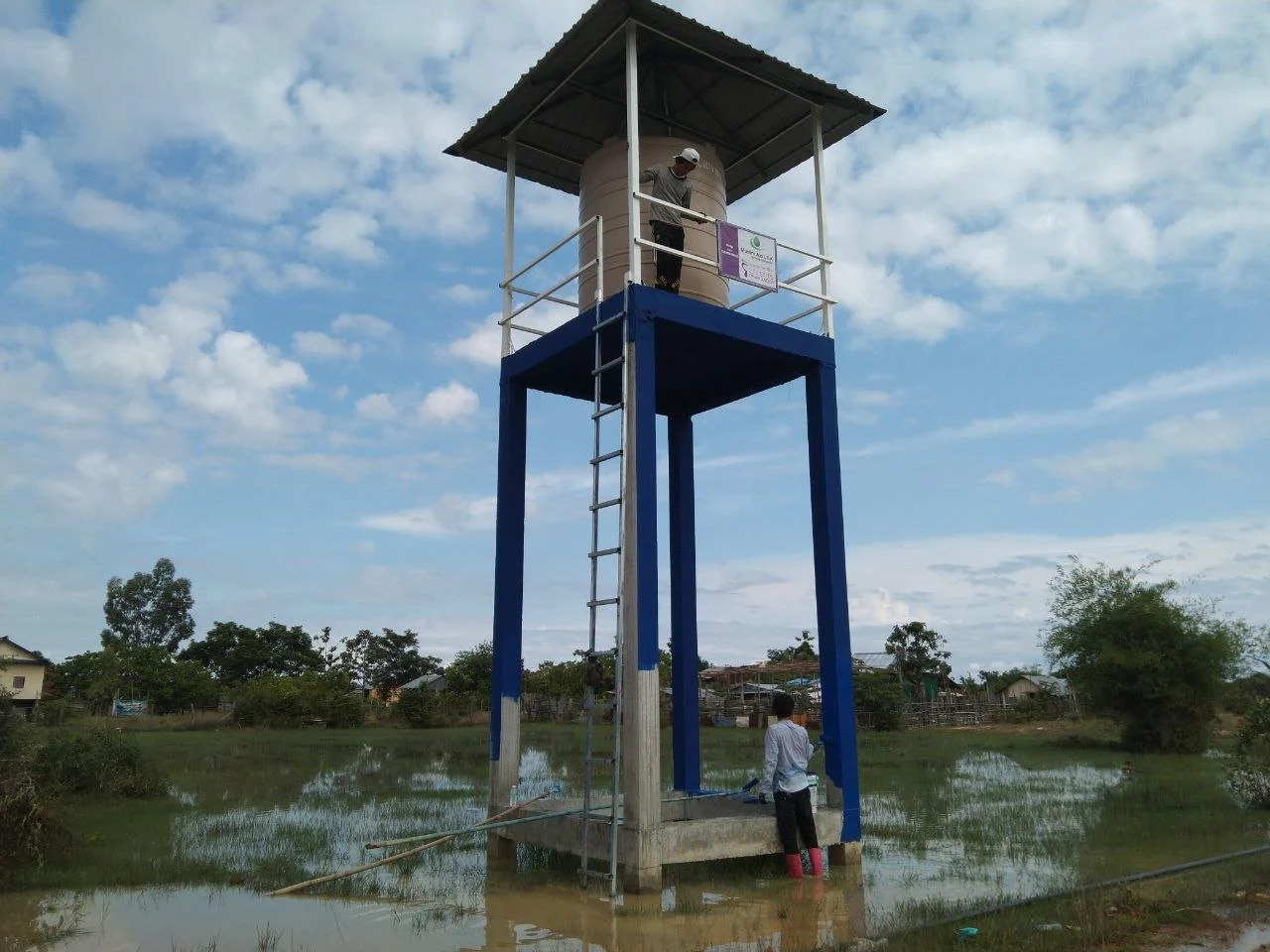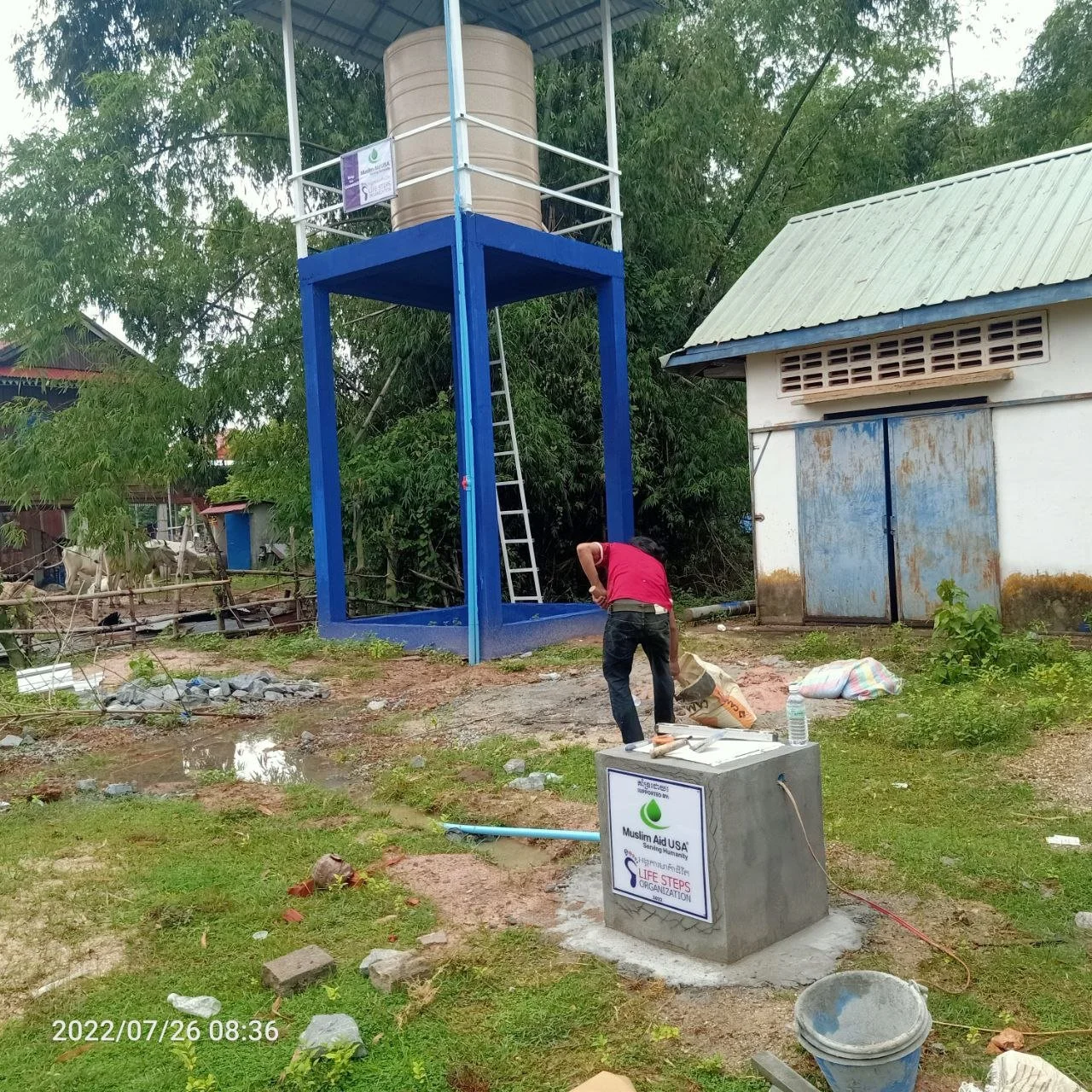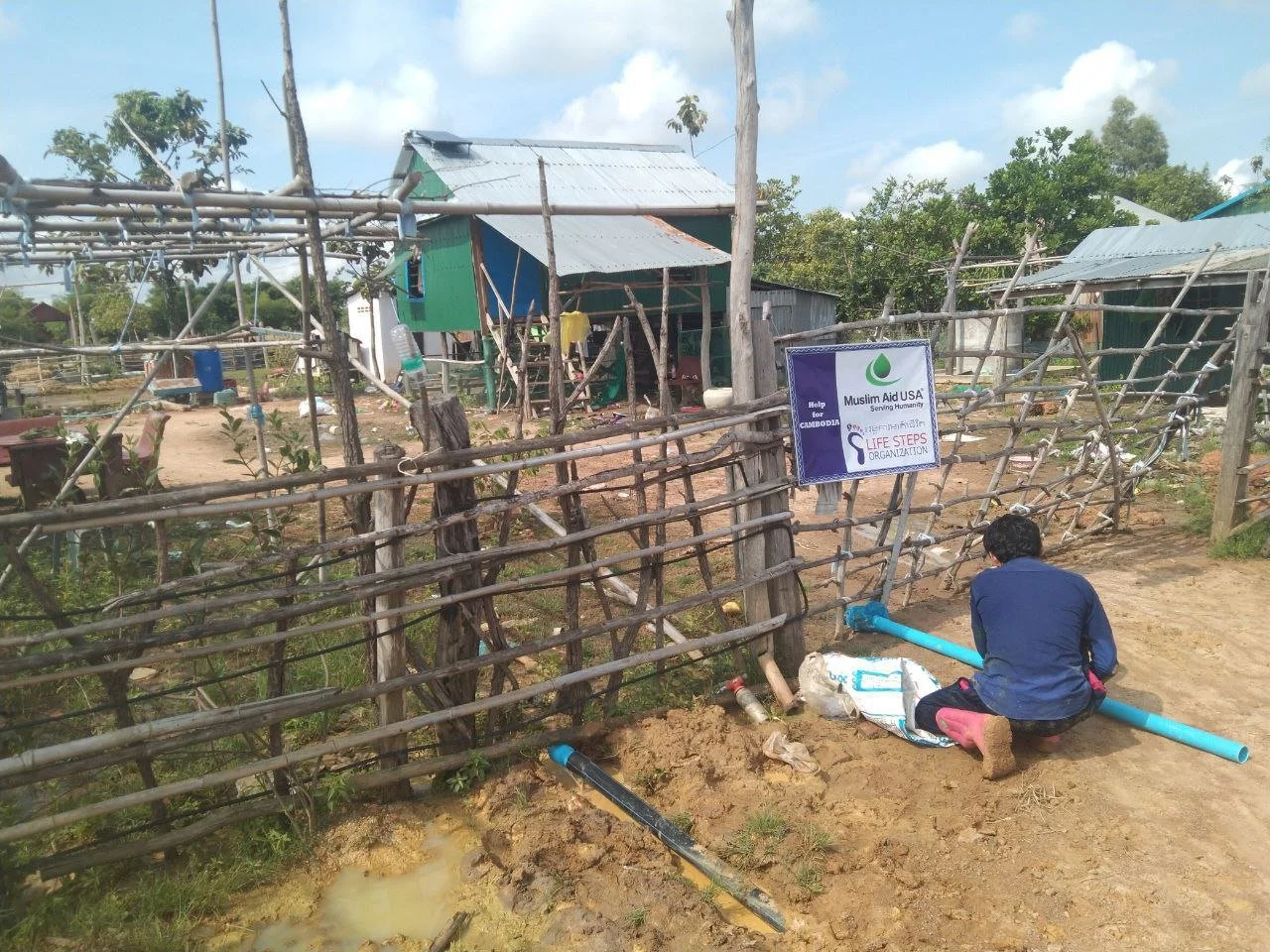
LSO strongly believes that ensuring a safe water supply is vital to keeping Cambodian people healthy and contributing to the country's development. We have long experience in the area of rural water supply improvement through the installation of water wells for the needy and poor families or community institutions such as schools, mosques, pagodas, and health centers that cannot afford to buy and install water wells –easy access to safe water for the family, children, and the neighboring populations. With the support of MA-USA, LSO is implementing this community safe-water supply system free of charge in the remote villages. We bring safe water to the doorstep of each house in a rural village, from a deep-drill water well and an overhead tank (powered by an electric or solar pump).
The more we can extend this initiative, the more people will benefit from safe drinking water and a better life.
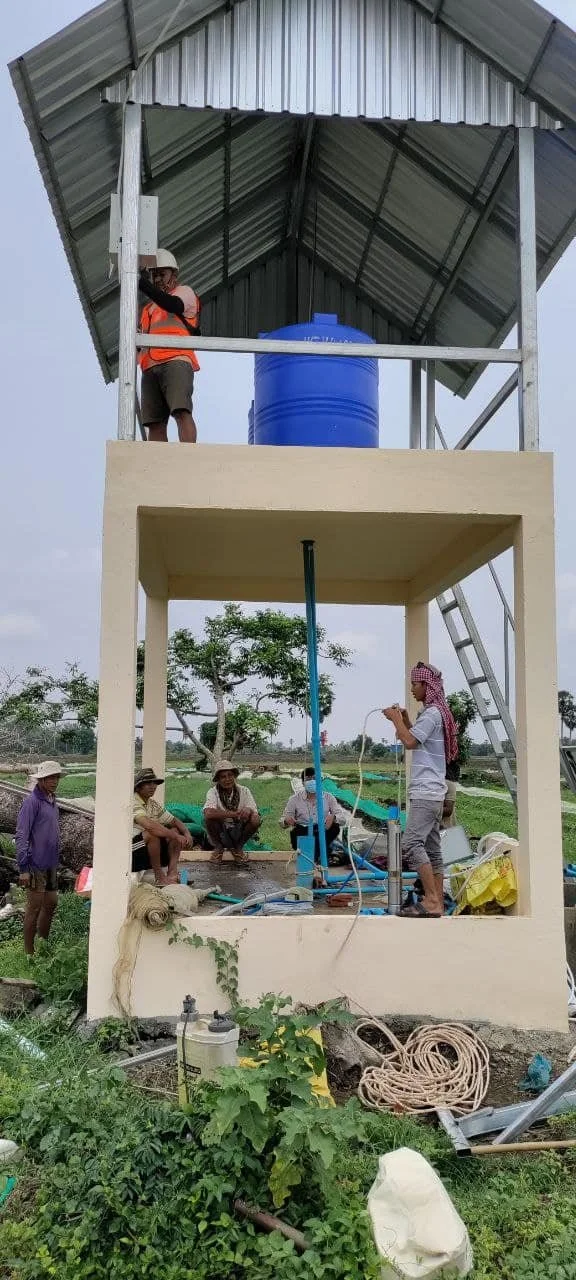
Cambodia Community Water Project (CCWP)
Water supply in Cambodia is characterized by low access in rural areas (62.8% in 2018) and rural sanitation (78.8% in 2018), compared to relatively high access to an improved water source in urban areas (96%). Nearly half the population of Cambodia lacks access to safe water and basic sanitation. However, the rural water supply in Kampong Chhnang province in 2018 reached only 60.8%. Some 40 percent of primary schools and 35% of health centers in the country lack access to safe water and sanitation. Disparities in access to safe water between urban and rural areas, across and within provinces, and among different wealth groups are clear. People living in rural and peri-urban areas have a fivefold higher prevalence of diarrhea than in some regions, and the rich have 22 times more access to piped water than the poor. The countryside has plenty of available groundwater; the problem is that not much of it is safe enough to drink. Many ponds or open wells are contaminated by industrial runoff, human waste, or other pollutants such as arsenic and E. coli bacteria. The main reason millions of Cambodians lack access to safe water is that the government has to prioritize other development areas, such as infrastructure, education, and agriculture for food, so clean water and sanitation sometimes haven’t been a focus. Local authorities in rural areas often place more importance on building new roads and schools than on improving the water supply. Cambodia had some of the highest infant and under-five mortality rates in Southeast Asia, at 33.9 and 39.7 per 1,000 live births. Attention to rural water supply, sanitation, and hygiene will unquestionably deliver results—fewer child deaths, better learning at school, fewer diseases, more productive workers, and less health costs for the people and the system.